Can anyone confirm or deny, from personal experience, the possibility of cheating/bypassing/defeating whatever you want to call it the TPMS by placing all four TPMS sensors in a pressurized (32 psi) PVC tube ???? I'm getting conflicting opinions on this one by searching old posts and would like to know before I resort to spending the $10 and building a pressure PVC tube to find out...
07_Grabber are you out there? He posted on this thread, http://forums.stangnet.com/showthread.php?t=673998&highlight=tpms , post #25 that it works. Lots of others have made reference to it, but I would like to here from him or someone else who attempted this. thanks.
While trying to locate a leak in 4" PVC vacuum piping, we pressuized it to 60 psi. The pipe was 6 to 7 feet underground and was covered with 6" thick by 2 foot wide slab of red concrete to prevent accidental excavation because it carried sulfur dioxide (poison) gas when in operation. When the piping failed, over 120' of the pipe came through the concrete and dirt and deposited itself over 100' away from the original trench, throwing chunks of concrete up to 10' long, 10+ feet from the hole. Thank God no one was killed. I wouldn't have believed it if I hadn't seen the carnage myself. It gave me a whole new respect for the amount of energy stored in compressed air. NEVER EVER pressurize PVC with air. It is a bomb. Use steel, brass or copper only.
OK after much searching, I found MUCH information spread around that this DOES work. Here is what most makes me believe it does work: If this is someones car here on SN I appologize for grabbing the picture w/o providing you credit, it turned up in a google search for TPMS+FORD+MUSTANG+07... But I do have to compliment on a clean execution It is functional, secured, completely out of sight and hidden, but also in an extremely convienent location for access!
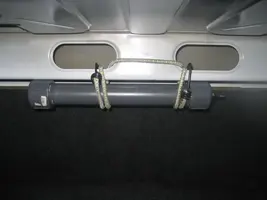
Two things.... First, most PVC pipe is suitable for air pressure, assuming that you follow the correct schedule (40, 80, etc). But thank you for the warning.... much better than seeing a fellow stangnet member perforated by PVC shards. Secondly, I remember reading at one point that the TPMS was based on rotational velocity, and not air pressure. I don't know whether or not this has been confirmed, but the principle is the same. As long as the sensors are stationary (not rotating) and under pressure, you should have all the bases covered. Either way, if you have a tuner, you should be able to turn off the TPMS system.