Painting Engine Bay

Discussion in 'Classic Mustangs' started by 69Rcode_Mach1, May 31, 2004.

  1. 69Rcode_Mach1 Active Member

    Member Since:
    Apr 21, 2004
    Message Count:
    1,478
    Likes Received:
    0
    Trophy Points:
    36
    Location:
    Salt Lake City, Utah
    Anybody here repainted their engine bay and can give me some good tips. I am taking out my engine this summer to do my performance work. I figured I might as well paint it while it's out. How much will the supplies all cost me if i do this myself? What things will i need? My uncle has done this before. Any tips would be appreciated too.
  2. zookeeper Founding Member

    Member Since:
    Aug 25, 2001
    Message Count:
    3,087
    Likes Received:
    0
    Trophy Points:
    56
    Location:
    Northern California
    I'm currently painting my car, engine bay included and while it involves a lot of work to do a good job, it's not all that expensive. For instance I removed the engine, trans, radiator, battery, steering column, steering box, all steering linkage, brake lines, master cylinder, heater hoses, all wiring, hood hinges, window washer assembly, speedo cable and e-brake cable, throttle pedal, all the chassis plugs, sway bar, engine mounts, and all front sheetmetal. It sounds like a lot, but it only took a weekend to get it apart. If your engine bay still has the original paint on it, you are in luck! The factory paint comes off very easily. I used lacquer thinner in a spray bottle (wear a paint respirator, they're only $20 or so) and some #3 steel wool (also wear dishwashing gloves since the thinner and steel wool will do a number on your hands). Then it's a matter of spraying a small area and scrubbing. It works very well, and you can do the whole engine bay in a few hours. As far as the actual priming and painting, I recommend doing one panel at a time. That is, the firewall first, then let that dry, mask it and do the right inner fender/shock tower and so on. The reason is that you have to paint it from inside, and it's nearly impossible to keep from bumping into wet paint. After that, it's a good time to detail everything, replace what you can, spruce up what you can't. Check Eastwoods website www.eastwood.com for some really neat paints, like their high temp cast iron manifold paint. I used it years ago on my wife's car on every cast iron part like the manifolds, mastercylinder and steering box and they still look like new nearly ten years later. If you're looking for a factory resto look, don't forget al the decals and such, they really lend a "quality" look to the whole job.
  3. lidflipr New Member

    Member Since:
    Dec 31, 2003
    Message Count:
    23
    Likes Received:
    0
    Trophy Points:
    0
    Location:
    Peoria Az
    I'm restoing my 65 stang, to do it right it is a lot of work, it's not expensive just TIME and effort. I removed everything, engine, trans, radiator, battery, steering column, steering box, all steering linkage, brake lines, master cylinder, heater hoses, all down to the metal and took all front sheetmetal off including the fenders. Make sure you bag a tag all your parts. Get plastic bags and a marker to keep track of those small parts and bolts.
    Mine had the the original paint and the PO painted the bay black with a paint can :bang:. The paint cames off very easily I used aircraft oderless paint remover. dam this stuff is good $20.00 a gallon at auto zone. Since I am restoing my stang I bought a small sand blaster for those tight areas. You can pick one up for $15.00 and use silica sand/ make sure you use a dust mask/ ear plugs you will get sand every where. However that was the finishing touch the bay looked great just down to bare metal.nice

    Take a pic of progress you won't belive how bad the bay could look at the beginning and when your done it looks :banana: :banana:
  4. paintballtommy New Member

    Member Since:
    Jan 31, 2004
    Message Count:
    246
    Likes Received:
    0
    Trophy Points:
    0
    Location:
    concord, ca
    id have to say not to use any of thos stripper products. i tried it on my engine bay and had some trouble with it getting all the stuff off. i found that a big wire wheel on an angle grinder is much more effective at clearing the paint off.
  5. allcarfan The Answer Man

    Member Since:
    Apr 8, 2001
    Message Count:
    3,755
    Likes Received:
    0
    Trophy Points:
    56
    Location:
    North Atlanta
    The best, inexpensive, good looking paint job....

    thoroughly clean your engine bay of dirt, grease, and grime. Then rough up all of the surfaces. Cover your hoses, MC, and whatever else you have exposed with aluminum foil...easier to work with than tape and paper. the aluminum foil is used to mask things off. i wouldnt ev worry about primer. Find someone with an air compressor and spray gun or rent one. mix rustoleum satin black with paint thinner until it is dripping off the stick. Spray your engine bay with about 3 coats of this...it looks great, is cheap, and is very druable. We just did a 56 belair frame like this. My enigne bay is currently painted in this way also
  6. Pakrat Founding Member

    Member Since:
    Aug 6, 2000
    Message Count:
    3,856
    Likes Received:
    0
    Trophy Points:
    56
    Location:
    Currently: NH Originally: Rhode Island (and all po
    I found this saved in my "Things to get around to" archive in one of my resto tips folders. Very informative with or without engine removal. I have not tried it so I can't vouch for any of it, but I intend to use it for at least a reference when I get around to it.

    PAK.


    Here is an excellent article on engine bay detailing:

    Classic Mustang Engine Compartment Detailing
    By John Dettori

    Detailing an engine compartment can be a weekend project. Depending on how close to concours correct you want to achieve, you could spend anywhere from $100 - 500 improving your engine compartment. $300 will do a nice job. There were numerous articles in Mustang Monthly, Mustangs & Fords, etc., in addition to the MM publication "Mustang Monthly's How To Vol. One". Assuming you're not going to remove the engine, nor spray paint from a gun, for a good quality job that you can do yourself over a weekend, you'll need:
    1. Paint

    • 2-3 cans engine paint, i.e. Krylon Ford Corporate Dark Blue, Eastwood Ford Dark Blue ($15)
    • 3-5 cans semi-flat black paint, i.e. Krylon Semi-Flat Black, EW Under Hood Black ($25)
    • 2-3 cans rough cast steel paint, i.e. Halon Cast Blast, EW Spray Gray ($15)
    • 1-2 cans stamped/machined steel paint, i.e. Eastwood Detail Gray ($10)
    • 1 can Exhaust Manifold Paint, i.e. EW Stainless Steel Gray Hi-Temp Coating ($15)
    While some swear by Krylon, I personally prefer the Eastwood paints like Under Hood Black. They are a little more expensive, due to the high quality achieved via high paint solids content, coverage is superior, and you'll need less paint. There are several excellent products available, so you may want to ask at car shows, or buy a few and test them out for yourself.
    Optional: specialty paints that approximate the following finishes:

    • Silver Cad plating
    • Carburetor Bronze
    • Gold Cad plating
    • Power Steering Pump Paint (Turquoise Blue)

    2. Parts

    • Tune-up parts if needed
    o Distributor Cap, points, rotor, ignition wires, spark plugs
    • Belts (Fan, P/S, A/C)
    • Hoses (Upper/Lower Radiator, heater, vacuum)
    • Fan Shroud - if appropriate
    • Gaskets, sealer
    Optional: correct parts for your car - all available repro


    • AutoLite Distributor Cap
    • AutoLite Ignition Wires
    • "Yellow-top" Ignition Coil
    • AutoLite Battery
    • Correct Belts
    • Correct Battery Cables
    • Correct Alternator
    • Correct Solenoid
    • Correct Upper/Lower Radiator Hoses
    • Correct Radiator Cap


    3. Supplies

    • Notebook & Camera
    • 30 gallon Trash Bag
    • Ziplock Bags
    • Indelible marker
    • Wire hangers/twisties
    • Scotchbrite Pads
    • Assorted Sandpaper
    • Newspapers
    • Masking Tape
    • Small paint brushes
    • Testor's Model paints
    • Wire brush
    • Fantastic/409
    • Simple Green
    • Tar & Bug Remover
    • Engine Degreaser
    • Kerosene
    • Brake / Carb Cleaner
    • Cardboard boxes
    • Old towels / blanket
    • Fender protector


    4. Misc.

    • Engine Decal Kit for your engine ($20)
    • Wire separators ($3)
    • Grommets ($5)
    • Fasteners, bolts, wire ties, etc.


    Disassembly
    Run the engine to get it warm, then degrease your engine using a brush to remove as much dirt and grime as you can. A Power washer, steam cleaner or high pressure do-it-yourself car wash works well. Photograph the way everything is connected while it's still running; get a notebook, make a diagram, take notes, etc.
    Remove all the accessories, hoses, belts and wires. Keep the distributor wires attached to the cap. If you're really going nuts, drain and remove the radiator and unbolt the exhaust manifolds from the block and the rest of the exhaust system. Bag and tag everything that comes off, using the Ziplock bags for small items, with clear labels, i.e. 67 Mustang 289-2V Exhaust manifold bolts 16 7/16. Large items get a masking tape tag.
    Remove the battery tray, solenoid, voltage regulator, alternator, brackets, and little things like the windshield washer reservoir & pump. The engine compartment brace(s) should come off too. If removing the radiator, be sure to drain the coolant into an oil pan or other container and dispose of properly. Don't let it spill on the ground; it will kill your pets. And don't reuse it. If you're thinking about having the radiator tested, cleaned, or recored, now is the time.
    Remove or cover the distributor. Wire brush (brass works best for me) the iron areas of the block that have rust or scale. Try Scotchbrite if necessary on softer finishes. Use compressed air to blow the dust created off. If necessary use some kerosene on a brush or rag to remove grease or grime remaining.
    Getting It Done
    Paint the motor first. Pick a warm dry day. Remove the air cleaner, stove pipes, carb, and valve covers, and set them aside for separate refinishing. Prep the block surface by removing any rust, loose paint, scale, etc. with a wire brush. Stuff paper towels in the intake manifold holes. Get the wires & hoses not removed out of the way. While engine compartment detailing is easier with the hood off, it's doable with the hood on. Once the surface is clean enough to paint, cover the engine compartment walls with cardboard, towels, etc. and make sure the fenders are covered. Spend time taping and covering the areas you don't want to paint. Paint the motor with even strokes from 6-10". If you removed the valve covers, use a strip of cardboard to cover the valve train. Give it a second coat when dry. A good prep job plus a high quality paint will yield a wet look when dry.
    Paint the air cleaner and valve covers while the block is drying. Sandblast or strip these parts after degreasing. The better the prep, the better the results. You may choose to bang-out or body work any dents in these parts (the reason for removing them). Paint on cardboard, constructing paint stands from the cardboard boxes and wire hangers. Paint the interior of the air cleaner, including the lid bottom. Do not paint the inside of the valve covers. Two coats of paint on each part.
    When dry, remove the cardboard & rags. Cover the motor with a trash can bag; two if possible. Use Scotchbrite to scuff the walls of engine compartment. If the walls have heavy rust or scale, you may wish to use a rust inhibiting primer like Eastwood's Corroless or POR-15. Then paint the satin finish black on the walls, using light coats. You're done when it looks good to you. Don't forget the shock tower caps, radiator support, engine brace, battery tray, and exposed frame crossmembers. Most pulleys, engine brackets, and the fan also get the satin black paint. Sandblasting is best, but at least degrease and scuff it. The radiator is actually a more glossy black, like Eastwood's Chassis Black, but some use the engine compartment color. TIP: when the engine is complete, install the new spark plugs. There's much more room before the exhaust manifolds are in.
    If you removed the battery tray, there maybe a rust or even a hole underneath it; this is common. You can repair the hole with a product like POR-15's Patch Putty. A severe rust problem in this area or in other engine compartment walls * called "inner fender aprons" * may necessitate cutting out the rusted metal and welding in replacement sheet metal. But that will be covered in a separate article.
    Power steering pumps were either black or a turquoise blue. Degrease, loosen but do not remove the hoses. I sat mine on a lower frame member. Use the Scotchbrite to scuff up. Cover the surrounding area with newspaper and masking tape. You're going to paint this in the engine compartment, but it's not at hard as it looks. You only need to paint what you can see. If using the blue, get the paint. Use a base coat of silver. When dry, spray the blue over the silver. When dry, cover the pump with newspaper and paint the pulley satin black.
    Save the cardboard you used for the walls. If you removed the exhaust manifolds, sandblast or wire brush the rust and scale off. Using a foam brush and the High-Temp exhaust manifold paint, them, and let dry. If you're not going to have them installed on the motor within 72 hours, cure them in an over for 15 minutes at 400-degrees. That is, if you have an extra electric oven. Don't use the oven in your home! The makers of POR-15 make a high temperature coating like the EW product that appears to allow a week or two between application and curing.
    Put the cardboard in place over the walls to protect your newly painted finish, remove the garbage bag and install. Then hook up the rest of the exhaust system.
    The hood latch & catch, hinges & springs, coil bracket, master cylinder body, and steering gear body get the natural metal paint (EW Spray Gray). The alternator body gets the lighter gray (EW Detail Gray). The Distributor housing, shaft, vacuum advance, and fan spacer get the aluminum shinny paint. From your notes, you'll see what parts were gold cad, silver cad (a bluish tint on a silver part), etc. Refinish as you see fit. Don't forget the battery hold down bolts, which were the lighter gray. Then, you get to put it all back together!
    Reassembly
    Install the distributor if you removed it. Note - this will require tune-up/timing when finished. Use the Testor's Model paint and a small brush to make a timing mark. Install the fan, alternator, pulleys, and belts. Then add the radiator, shroud, hoses, thermostat, and sending units. Fill with coolant. Install the carburetor. Do all your tune-up & electrical next followed by vacuum and other hose routing. Put your vinyl dressing on before attaching the hoses. Add the battery, if not in already. If you bought a new repro, it came dry, and you'll need to add battery acid. You might want to set this up the night before. I painted the red letters on the top and side of the battery with red Testors model paint.
    Detailing touches are next like decals, wax, and polish. Paint the body of the coil satin black, fit on the bracket, then apply the clear decal with gray writing. Paint the voltage regulator engine blue, then detail the metal bottom with EW Detail Gray paint or equivalent. Then apply the clear decal with yellow writing. Carefully apply air clear engine designation decals. Reinstall engine compartment braces.
    Now you get to start it, tune-it and fool with it. Especially if you removed the distributor. Make sure your wires are correctly attached. I label each wire with masking tape and the cylinder #, then remove all wires from the spark plugs, leaving them attached to the distributor cap. I then match the new wires by length on the new cap, just like the old one. If the carb was properly set before, it should be properly set now; don't touch it.
    Hope this helps. While I'm sure I missed something, this is the basic procedure. It resulted in 30 1st place finishes for my 70 Mach I in local shows, and four 2nd & 3rd place finishes at MCA, SAAC, and other national events. I've applied this methodology to about ten other cars I've worked on for friends. The results speak for themselves
  7. jae902 Member

    Member Since:
    Feb 11, 2003
    Message Count:
    175
    Likes Received:
    0
    Trophy Points:
    16
    Its alot of work if you want to do it right. And trust me, do it right the first time. I completely stripped everything out. Used paint stripper to rip off the old paint, and that took forever too. But you can just clean the surface, and ruff it up with some sand paper. I filled in alot of holes that were not needed, and fixed some rust spots that i found. All in all, it was worth it, cause a clean engine bay really makes the car stand out when people look at your engine. Check out the pics on my car domain site. http://members.cardomain.com/jae902
  8. billy Founding Member

    Member Since:
    Apr 2, 2002
    Message Count:
    356
    Likes Received:
    0
    Trophy Points:
    16
    Location:
    White Lake, MI
    I really dont care for Rustolem at all... It takes forever to dry also....

    Krylon is not bad....

    But I really recomend SEM.... You can find it at any paint supply shop.... This is what all the guys in our body shop at work recomend for doing engine compartments... I did mine in it.... It turned out SWEET..... It is a little pricey though about 8.00 a can if I remember....

    [IMG]

    They also make self etching primer in spray can also.... This stuff rules... It blows away Rustoleum and Krylon Primer by far....

    [IMG]


    It is very time consuming but the results will be worth it in the long run... Just take your time and do a thourgh strip job and it will turn out awsome.....

    Good Luck, Billy
  9. billy Founding Member

    Member Since:
    Apr 2, 2002
    Message Count:
    356
    Likes Received:
    0
    Trophy Points:
    16
    Location:
    White Lake, MI
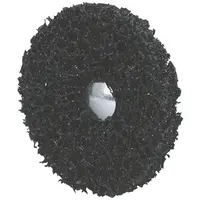
    Oh yeah... For stripping I really recomend these... 3m makes them... You can get them at the automotive paint supply store also....

    They work great....

    [IMG]

    Good Luck, Billy
  10. wickedmach1 New Member

    Member Since:
    Apr 9, 2003
    Message Count:
    376
    Likes Received:
    0
    Trophy Points:
    0
    Location:
    Austin, TX
    Use an angle grinder and a wire cup brush, it will remove the paint and will also leave the proper finish in the metal for the primer to bite. Go to Eastwoods website and order the etching primer and the engine bay paint, it looks great and is the proper finish. Be sure to clean the engine bay all the way to bare metal and clean with alcohol before painting. I have pictures of the work that I did on my 70 Mach. PM me if you would like pics. Good luck.
  11. allcarfan The Answer Man

    Member Since:
    Apr 8, 2001
    Message Count:
    3,755
    Likes Received:
    0
    Trophy Points:
    56
    Location:
    North Atlanta
    Forever = 20 min ?? Thats how long mine was completely dry. Remember...thinned with paint thinner. That is key.
  12. zookeeper Founding Member

    Member Since:
    Aug 25, 2001
    Message Count:
    3,087
    Likes Received:
    0
    Trophy Points:
    56
    Location:
    Northern California
    Please don't get offended, but why go to all the trouble of yanking the motor, gutting the engine bay, and stripping off the paint if you're just going to use a spray can? Ask around and I'll bet you could find a friend to spray some paint with a gun that will outlast anything that comes out of a rattle can. The trouble with cans is they can't be catalyzed, therefore they are always softer and less durable than a decent acrylic enamel or basecoat/clearcoat job. Nothing is worse than to go to all the trouble of doing the prep work only to have the paint come off the first time it's exposed to gas, degreaser or battery fumes. I found that out the hard way on my last fastback...
  13. allcarfan The Answer Man

    Member Since:
    Apr 8, 2001
    Message Count:
    3,755
    Likes Received:
    0
    Trophy Points:
    56
    Location:
    North Atlanta
    you dont have to yank engine, strip engine bay or sand to bare metal. mine looks great and has lasted 8 months now
  14. zookeeper Founding Member

    Member Since:
    Aug 25, 2001
    Message Count:
    3,087
    Likes Received:
    0
    Trophy Points:
    56
    Location:
    Northern California
    Everyone has their own level of quality, and for me, it's show-quality or nothing. There's simply no way to do a show-quality job with stripping everything. You can't paint around the steering column, or the inside of the shock towers or behind the brake lines and master cylinder without removing them. You can see there however, and if you choose to paint the engine bay a color other than black, it's gonna show. While I would never pull a car apart just to paint the engine compartment, having the engine out for a rebuild is always a good time to clean things up. I usually use the time spent waiting on the machine shop to detail things.
  15. sooners2win New Member

    Member Since:
    May 23, 2004
    Message Count:
    40
    Likes Received:
    0
    Trophy Points:
    0
    Location:
    Muskogee, OK
    OK, I bought 4 1/2 angle grinder and wire cup brush..........man does that thing knock off the paint :nice: Still going to have to pull fenders to it right..........by the way, how hard is it to do pull fenders on 70? :shrug:
  16. wickedmach1 New Member

    Member Since:
    Apr 9, 2003
    Message Count:
    376
    Likes Received:
    0
    Trophy Points:
    0
    Location:
    Austin, TX
    It's easy to pull them off, putting them back on and all your lines lining up is the pain. Make note of where and how many shims are used. This will save some time going back on.
  17. saddlebackcobra New Member

    Member Since:
    Jul 8, 2004
    Message Count:
    5
    Likes Received:
    0
    Trophy Points:
    0
  18. TIGGER Founding Member

    Member Since:
    Mar 6, 2000
    Message Count:
    371
    Likes Received:
    0
    Trophy Points:
    16
    Location:
    Portland, OR
    I have to agree with zookeeper. The last time I had the engine out on my 67, I repainted the engine compartment with enamel instead of rattle can. I too was tired having other fluids eat the paint. It is well worth the extra time, money and effort if you are going to keep the car.
  19. saddlebackcobra New Member

    Member Since:
    Jul 8, 2004
    Message Count:
    5
    Likes Received:
    0
    Trophy Points:
    0
    I agree with Tigger. Don't use spray paint. Even though it doesn't sound as effective, stick to something you apply with a brush or a painting gun. Try that kit listed in my last post. Worked for my neighbor. He loves it. There are directions with it too for either application, so you cant screw up. good luck.
  20. sooners2win New Member

    Member Since:
    May 23, 2004
    Message Count:
    40
    Likes Received:
    0
    Trophy Points:
    0
    Location:
    Muskogee, OK

Share This Page