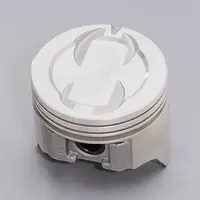
I'm currently running Crane Energizer 1.7 roller rockers on a mostly stock engine. I'm getting ready to install a set of ported E7TE heads and was wondering how big of a cam (lift) can I run before I start pushing the valves into pistons? I'm already running and Edelbrock/Holley intake/carb and have a set of Hookers that will go on with the new heads. Also does the different ratio also affect the duration or just lift?
Maybe I'll ask the question this way. Here is the info on the cam Im thinking of using, it's a Comp Cam Nostalgia Plus hydraulic model the specs using my 1.7 RRs would be .510I/.505E lift with 219I/226E duration @ .050 with a 112 lobe seperation. Or maybe the Crane Blueracer cam it's about 2/3 the price of the Comp Com with similar specs. Post your opinions. Or, tell me what cam worked in your engine with stock pistons and heads?
It would really depend on your pistons, if your heads have been milled, etc. Really the only safe way is to use some clay to check clearances. I can say that I am running E7TE's with 1.72's and a cam with corrected specs (due to the higher ratio rockers) that exceed the specs of the cam your looking at with no problems, but again that is with my setup. Probably OK, but I would still recommend checking even though it is a pain.
Stock engine (as it came from the factory only 41K miles) except for the 4bbl currently. The heads I'm installing have only been ported and the egr bumps removed not milled.
Higher ratio rockers will increase the effective duration when measured @.050" lift. (The reason reputable camshaft companies began using the "@.050"" standard measurement is due to the fact that airflow effectively ceases at anything under .050" valve lift. So when you increase the duration @.050", even though duration @Zero remains constant, you will gain an increase in overall airflow.)
Blue Thunder you seem prety knowledgable about this stuff what do you think of the cam I refer to above? Will it work with stock pistons and 1.7RRs or will it be to close to call. I've got a edelbock performer cam I can istall know but I'm thinking I'll be dissapointed if I use it.
It will *probably* be fine with that cam, but since you will be swapping the heads anyway, you should check piston to valve clearance with clay. (.100" is OK) Better safe than sorry, especially with valves.
I do plan on checking. I just wanted opinions from others more knowledgable whether I was way off base with this cam no way it will clear your stock pistons or should work but verify clearance before firing it up. Could I use a solid lifter in place of the hydraulic one while measureing clearance? The hydraulic may not give a true measurement since it's not under pressure correct? Anybody got a quik step by step on how to check piston/valve clearance?
just disassemble an old lifter --remove spring =whalla solid lifter for measuring as far as the clearance here is what I've heard never done it though I went with .484 lift on 1:6 ratio slight up from my .469 previous cam 1. put clay on piston top 2. Bolt head back on with same type of head gasket torque to specs 3. remove head 4. carefully remove clay and measure or if you have the proper tool measure clay indentions. piece of clay I mean cake right.
If you don't have a used and similar-type head gasket for the tests, you can test without a gasket and add .035" to the resulting measurement, which is the usual 302 compressed head gasket thickness.
OK I just got a little education from the 5.0 guys. It's not max lift that I should be "totally" worried about because at max lift the pistons at the bottom of it's stroke. It seams that centerline and duration play a bigger part in P/V clearence.
yes because the intake opens 20-30 degrees before the piston reaches TDC on the exhaust stroke. Just make sure you have valve reliefs or have your pistons fly cut and your in business